
Toronto
January 29, 2026
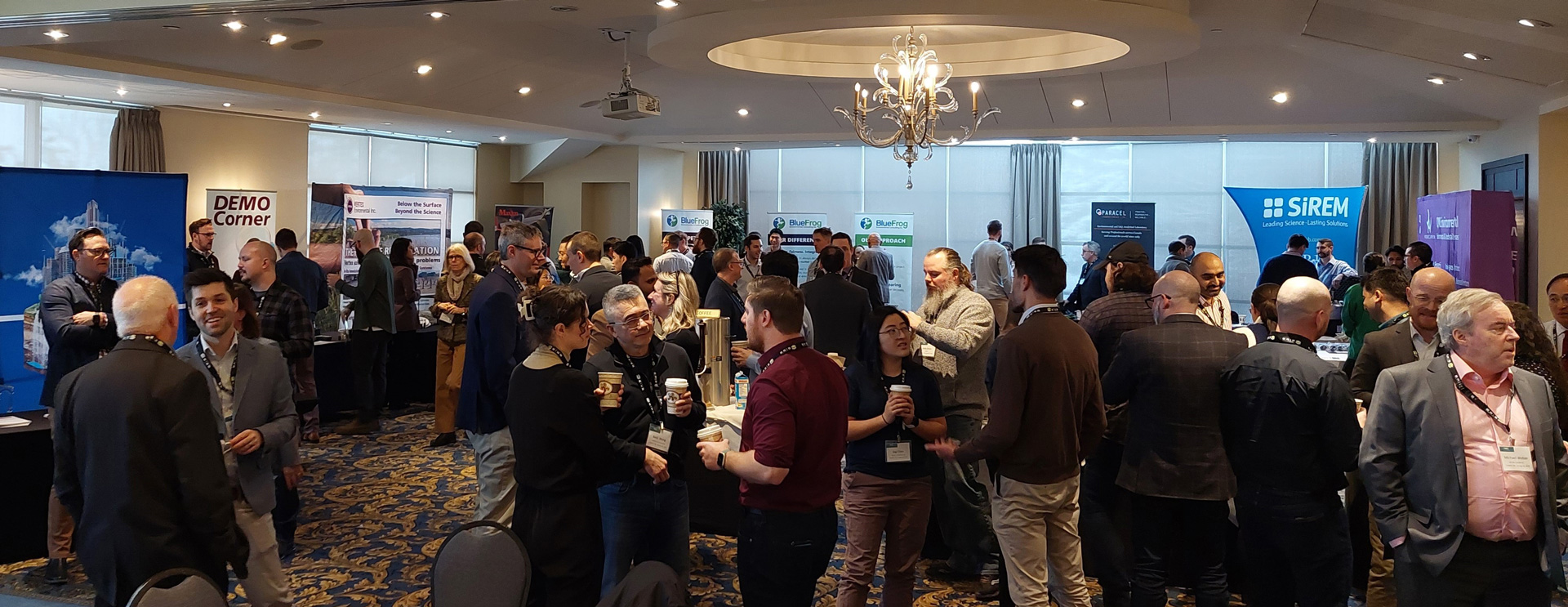
SMART Remediation talks have focused on innovative technologies for remediating contaminated sites, approaches for site characterization, project case studies, regulatory and industry perspectives, and other related topics.
View 2026 Toronto event agenda
Speakers

Jacquelyn Stevens,
Willms & Shier Environmental Lawyers LLP
Case Study: Digging into Environmental Law, Regulations, and Enforcement in Land (Re) Development!
- Bio |
- Abstract
- | Presentation
Jacquelyn Stevens
Jacquelyn Stevens B.Sc. (Hons.), M.Sc., M.S.E.L., LL.B., is a Partner at Willms & Shier Environmental Lawyers LLP and is a Certified Specialist in Environmental Law by the Law Society of Ontario. Jacquie has significant expertise representing a wide range of clients in environmental civil litigation, defence of prosecutions by environmental regulators, and at administrative appeals and hearings. Jacquie also provides effective advice and solutions for environmental due diligence and compliance, brownfields/contaminated site remediation, and environmental approvals for air, odour, noise and waste. Jacquie advises on cross-boundary migration of contamination and remediation options and has significant expertise involving contamination issues at dry cleaning operations and gas stations. Jacquie is called to the Bar in Alberta and Ontario.
Case Study: Digging into Environmental Law, Regulations, and Enforcement in Land (Re) Development!
Our firm’s environmental lawyers help our clients (re)develop land in various contexts. This work gives rise to a range of environmental law issues that our lawyers assist to resolve along with essential technical input from environmental consultants and contractors.
Common issues include:
1. Contamination in soil, groundwater, and vapour;
2. Hazardous materials and designated substances;
3. Flood zones protection including top-of-slope and tree driplines;
4. Species-at-risk;
5. Excess soil; and
6. Environmental enforcement.
The objective of this legal case study is to better equip conference attendees to spot issues that may give rise to concern when working on construction and land (re)development projects including when carrying out environmental investigations, excavations, and remediation. Our lawyers will canvass these issues at a high-level and with the objective of making attendees more aware of the complex web of environmental-related issues and laws when encountered in projects.

Malika Bendouz,
Chemco Inc.
PFAS Treatment and Removal Using Specialized Coagulants for Polluted Waters and for the Decontamination of Firefighting Equipment
- Bio |
- Abstract
- | Presentation
Malika Bendouz
Malika Bendouz, Technical director, earned her doctorate in water sciences from the National Institute for Scientific Research (INRS-ETE) and is the Technical Director at Chemco Inc, since 2019. Throughout her academic and professional career, she focused on the development of soil and GW remediation technologies. Which Include the utilization of oxidative and reductive technologies as well as biological remedies to remove the common contaminants such as: PAH, chlorinated compounds, pesticides, petroleum hydrocarbons and more. As a Technical Director of Chemco Inc., her primary role is the techno-economic evaluation of contaminated sites, the selection of the appropriate technology based on site specific data, and the innovative environmental technologies that reduce compliance costs and maximize clean-up efficiency. She would also coordinate laboratory services and analysis including bench scale treatability testing in saturated and unsaturated conditions.
PFAS Treatment and Removal Using Specialized Coagulants for Polluted Waters and for the Decontamination of Firefighting Equipment
The process of Coagulation and precipitation approach includes the addition of a coagulant which adsorbs PFAS, employing electrostatic and hydrophobic interactions. The precipitate is collected as a sludge waste, filtered, and handled for disposal.
Project experience has shown us that concentrations of PFAS in recovered fluids resulting from fire-fighting training events, foam tests or large scale industrial or petrochemical fires can range between several 100 and 40,000 ppb.
Rather than PFOS, the te- lomer 6:2 FTS (fluoro‐telomer sulfonate) is usually a more significant compound as well as cationic and anionic surfactants, fluoro‐organic compounds (partly precursors), high concentrations of dissolved organic carbon (DOC), suspended solids, pH etc. Concentrations of these compounds can be an order of magnitude higher than the PFAS values.
The following data derives from a controlled rigorous laboratory experiment with fluids from a foam test extinguishing trial. These data are provided as an indication of PerfluorAd® performance. A diluted solution with 1% AFFF was utilised for extinguishing a simulated fire generated with crude oil. Removal efficiencies results range from 39.3% to 99.55.
Summary :
• Almost complete PFAS removal
• Suspended solids removed simultaneously
• TPH significantly reduced

Derek Pizarro,
AST Environmental, Inc.
Design Considerations and Implementation Techniques for In Situ PFAS Sequestration Using Modified Clay
- Bio |
- Abstract
- | Presentation
Derek Pizarro
Derek Pizarro, CPG is a Senior Product Manager for AST Environmental, Inc. He is a Certified Professional Geologist and has 22 years of experience in environmental applications, specifically contaminant transport studies; permeable reactive barrier (PRB) design; fractured bedrock characterization; and reagent bench-scale testing and design for environmental sites and industrial process waste streams. Derek has contributed to bench testing and selection of contaminant remedies for CERCLA sites, projects under the Pennsylvania Act 2 land recycling program, and hundreds of privately funded cleanups.
Previously, Derek served as Environmental Products Director for a chemical manufacturer, developing chemistries for treatment of inorganic contaminants, EISB additives, sediment applications, and injectates for use in PRBs. He received a Bachelor of Science in Geology and Environmental Geosciences and a Bachelor of Arts in History from Lafayette College.
Design Considerations and Implementation Techniques for In Situ PFAS Sequestration Using Modified Clay
Traditional in situ PFAS treatment has relied heavily on colloidal activated carbon (CAC) and pump-and-treat systems, but CAC often struggles to capture the full PFAS mass due to limited sorption capacity, mobility constraints, and distribution challenges in certain soils. These limitations can hinder effective permeable reactive barrier (PRB) performance. Recent pilot programs have demonstrated that a modified clay (MC) — FluoroSorb®, an organically modified bentonite — can be injected into overburden to effectively sequester PFAS, offering higher sorption capacity and stability within the subsurface.
Independent testing has shown the MC to exhibit strong sorption kinetics and capacity across a wide PFAS concentration range, with compatibility alongside other remedial amendments. Bench-scale evaluations compared performance against ion exchange resin, granular activated carbon, and biochar, and also assessed competitive sorption in the presence of chlorinated VOCs and petroleum hydrocarbons. Relevant kinetics and co-contaminant performance data will be presented.
Field deployments in both the U.S. and Canada verified injectability and distribution of MC for source-area treatment and PFAS plume interception using direct-push injection. Multiple slurry densities were evaluated to match amendment mass to PFAS loading, including co-injection with calcium polysulfide for simultaneous PFAS and hexavalent chromium treatment. A Canadian PRB installation has been monitored for more than a year under continued upgradient PFAS loading, with groundwater results and dye-assisted soil coring confirming amendment distribution, sequestration performance, and durability in situ.

Paresh Patel,
Pinchin
Bugs to the Rescue: Building a Biobarrier for Managing the Influx of Heavily Contaminated CVOC-Impacted Groundwater from Unknown Off-site Source(s)
- Bio |
- Abstract
- | Presentation
Paresh Patel
Paresh Patel is a Vice President and Practice Specialist of Contaminant Management and Remediation Services within Pinchin’s Environmental Due Diligence & Remediation (EDR) group and has been with Pinchin since 2010. A Professional Engineer in good standing with Professional Engineers Ontario, he holds a Master of Engineering in Environmental Engineering from Stevens Institute of Technology (New Jersey, USA). He brings more than 24 years of experience across remediation of soil, groundwater, and wastewater, with a particular focus on complex sites where impacts span multiple media, including soil, groundwater, soil vapour and indoor air. Paresh leads Pinchin’s Contaminant Management & Remediation business, integrating Phase II Environmental Site Assessments and rigorous remedial investigations—used to characterize conditions and inform risk and remedy selection—with subsequent design, implementation, optimization, and performance monitoring of engineered solutions.
Bugs to the Rescue: Building a Biobarrier for Managing the Influx of Heavily Contaminated CVOC-Impacted Groundwater from Unknown Off-site Source(s)
Background/Objectives. Conventional in-situ remediation methods, such as Permeable Reactive Barriers (PRBs) utilizing zero-valent iron (ZVI), can sometimes face significant challenges in addressing chlorinated volatile organic compounds (CVOCs) such as tetrachloroethene (PCE), trichloroethene (TCE), and their degradation products. While ZVI-based PRBs are effective initially, their application becomes financially unsustainable when confronted with highly impacted, groundwater migrating from unknown off-site sources containing elevated TCE concentrations (up to 24,000 µg/L). These conditions can necessitate frequent media replacement, driving up capital and maintenance costs.
In addition to cost challenges, uniform delivery and distribution of treatment substrates in complex geological settings, such as fractured bedrock, can further complicate the effectiveness of conventional approaches. To address these limitations for this project, this study investigates the feasibility of a biobarrier system leveraging bacterial communities and solid organic carbon substrates. The biobarrier approach used aimed to provide a sustainable, cost-effective alternative to overcome the high upfront and replacement costs associated with ZVI PRBs while effectively managing highly impacted groundwater.
Approach/Activities. To assess the feasibility of implementing a biobarrier for the project, a bench-scale study was conducted using readily available and cost-effective solid carbon substrates such as sawdust and peat. Batch microcosm and flow-through column studies demonstrated that peat supported complete reductive dechlorination of TCE to ethene, while sawdust stalled at cis-dichloroethene (cDCE) and produced excessive methane. Gene analysis indicated that peat microcosms fostered higher populations of Dehalococcoides and functional vcrA genes, correlating with superior TCE degradation performance. Column experiments further highlighted peat’s advantage over sawdust, with reduced biofouling and methane generation. These findings identified peat as the preferred substrate for biobarrier implementation. Following the successful bench-scale study, a full-scale biobarrier was constructed in 2013, spanning 125 metres (410 ft) in length and 5.5 metres (18 ft) in depth.
Results/Lessons Learned:
The biobarrier achieved substantial reductions in CVOCs, including average reductions of 70% and localized reductions of up to 90% within two years of operation. Provisions were made for future injections of liquid-based carbon substrates to boost performance or replenish the solid substrates if needed.
Groundwater quality was monitored over five years, and by the end of this period, the biobarrier had achieved a 97% reduction in contaminants without requiring maintenance or additional substrate injections.
This study highlights the potential of readily available solid organic substrates, particularly peat, for constructing PRBs to support in-situ bioremediation. By prioritizing locally sourced and cost-effective materials, such as peat moss, the approach reduces project costs while aligning with sustainability goals. Unlike commercially available substrates requiring energy-intensive production, peat moss offers an environmentally friendly alternative due to its natural abundance and minimal processing. These findings provide valuable insights into substrate selection and system optimization, enabling effective and sustainable long-term groundwater remediation in challenging conditions.

Reilly Andrews,
WSP
The Roller Coaster Ride of Unexpected: How We Investigate, Prepare, and Adapt
- Bio |
- Abstract
- | Presentation
Reilly Andrews
Reilly Andrews is an environmental engineer and team lead with WSP’s Contaminated Sites Group in Southwestern Ontario. He has undergraduate and master’s degrees from the University of Guelph, is a licensed Professional Engineer (P. Eng.), a qualified person under O. Reg. 153/04, and has a Project Management Professional (PMP) certification. Reilly has managed a wide variety of projects, including Phase I ESAs, Phase II ESAs (due diligence and O. Reg. 153/04), remediation programs, risk assessments, geo-environmental investigations and ECA compliance programs. Reilly is also involved in management of environmental data (e.g., laboratory analytical results and field monitoring data), including training junior staff using EQuIS database software. He has also worked on several projects under the excess soil management regulation (O. Reg. 406).
The Roller Coaster Ride of Unexpected: How We Investigate, Prepare, and Adapt
A real-world case study where an unforeseen technical challenge (“nightmare”) jeopardizes a mixed-use commercial-residential development. Despite thorough due diligence, a surprise emerged, requiring immediate disclosure to the client. The case will explore how stakeholders (client, lenders, JV partners) responded, and how the team worked to resolve the issue, protect the project, and preserve key relationships.
This case study follows a major mixed-use redevelopment in mid-town Toronto where extensive due diligence and pre-construction investigation suggested contamination risks were well understood and confined above the planned underground parking depths. With numerous historic assessments — including drilling constraints beneath former buildings — all available data indicated impacts would be fully removed during excavation, allowing a clean Record of Site Condition (RSC) to be achieved within the development schedule.
After excavation and removal of all known impacts, confirmatory testing indicated soil met Table 3 Standards; however, cis-1,2-DCE unexpectedly appeared in deeper groundwater near a former dry cleaner location. This unforeseen finding threatened both the RSC timeline and project delivery, requiring immediate communication with the client and stakeholders, and rapid reassessment of the remediation strategy.
Two options emerged — active remediation during construction, or a risk-based pathway. Given construction constraints and strict occupancy deadlines, the team pivoted to pursue a Modified Generic Risk Assessment (MGRA) while simultaneously preparing Tier 3 contingency work, ensuring the ability to shift quickly depending on MECP direction.
The project highlights the importance of planning for uncertainty, clear client communication, and maintaining parallel technical pathways when contamination emerges late in the process. Through proactive engagement with regulators and flexible strategy development, the goal remains unchanged: secure an RSC in time for occupancy, preserve stakeholder confidence, and deliver a successful redevelopment despite the unexpected.

Albert Ho,
First Capital REIT
The Roller Coaster Ride of Unexpected: How We Investigate, Prepare, and Adapt
- Bio |
- Abstract
- | Presentation
Albert Ho
Albert Ho, M.Eng, P.Eng, MBA, CRM, First Capital REIT Albert Ho is the Senior Director of Environmental Programs at First Capital REIT, a role he has held for over a decade. In this capacity, he provides strategic leadership to manage environmental risk and ensure compliance on a national scale. Albert’s responsibilities include securing Records of Site Condition (RSC) to support key business objectives, such as property development initiatives. A licensed professional engineer, Albert brings over 20 years of expertise in environmental risk management, site investigation and remediation, insurance, and sustainability. His career spans both consulting and industry roles, including experience in real estate and manufacturing sectors.
The Roller Coaster Ride of Unexpected: How We Investigate, Prepare, and Adapt
A real-world case study where an unforeseen technical challenge (“nightmare”) jeopardizes a mixed-use commercial-residential development. Despite thorough due diligence, a surprise emerged, requiring immediate disclosure to the client. The case will explore how stakeholders (client, lenders, JV partners) responded, and how the team worked to resolve the issue, protect the project, and preserve key relationships.
This case study follows a major mixed-use redevelopment in mid-town Toronto where extensive due diligence and pre-construction investigation suggested contamination risks were well understood and confined above the planned underground parking depths. With numerous historic assessments — including drilling constraints beneath former buildings — all available data indicated impacts would be fully removed during excavation, allowing a clean Record of Site Condition (RSC) to be achieved within the development schedule.
After excavation and removal of all known impacts, confirmatory testing indicated soil met Table 3 Standards; however, cis-1,2-DCE unexpectedly appeared in deeper groundwater near a former dry cleaner location. This unforeseen finding threatened both the RSC timeline and project delivery, requiring immediate communication with the client and stakeholders, and rapid reassessment of the remediation strategy.
Two options emerged — active remediation during construction, or a risk-based pathway. Given construction constraints and strict occupancy deadlines, the team pivoted to pursue a Modified Generic Risk Assessment (MGRA) while simultaneously preparing Tier 3 contingency work, ensuring the ability to shift quickly depending on MECP direction.
The project highlights the importance of planning for uncertainty, clear client communication, and maintaining parallel technical pathways when contamination emerges late in the process. Through proactive engagement with regulators and flexible strategy development, the goal remains unchanged: secure an RSC in time for occupancy, preserve stakeholder confidence, and deliver a successful redevelopment despite the unexpected.

Scott Ambridge,
Geosyntec Consultants
AI and Remediation: Smarter tools, Greater Efficiency, Broader Impact
- Bio |
- Abstract
- | Presentation
Scott Ambridge
Scott Ambridge (CPEng, P.Eng) has 20 years of experience delivering innovative data-driven solutions with a recent focus on integrating AI into environmental workflows, enabling teams to unlock insights from structured and unstructured data sources.
AI and Remediation: Smarter tools, Greater Efficiency, Broader Impact
The environmental industry is undergoing a generational shift as Artificial Intelligence (AI) moves from concept to practical application. Traditionally, environmental decision-making has relied heavily on numerical data and expert interpretation. Today, advances in Generative AI (GenAI) and Retrieval-Augmented Generation (RAG) are revolutionizing how we analyze vast amounts of data and text. As environmental challenges and remediation needs grow in complexity, the ability to rapidly and precisely synthesize and interpret large volumes of information becomes increasingly critical.
This presentation will showcase real-world case studies where AI has streamlined workflows, processed thousands of records, and supported clients in making more informed decisions using GenAI. By shifting from manual review to intelligent automation, we can reduce time-to-decision, improve transparency, and strengthen the evidence base. Imagine moving from reviewing individual well logs to leveraging AI that scrapes, analyzes, and synthesizes entire datasets – scaling insights from site-specific models to thousands of comparable records. Questions – such as whether a detected concentration reflects background conditions or is attributed to a particular source – can now be explored through AI-driven lines of evidence in minutes, not hours.
Looking ahead, the integration of GenAI with geospatial data, sensor networks, and predictive modeling will enable multimodal AI pipelines with transformative potential. These innovations promise to accelerate remediation, enhance risk assessment, and unlock new possibilities for environmental stewardship. The future of remediation is here – are you ready?

Scott Thompson,
Public Services and Procurement Canada
FCSAP Demand Forecast
- Bio |
- Abstract
- | Presentation
Scott Thompson
Scott Thompson holds a bachelors degree in Environmental Science from the University of Manitoba. He has delivered Environmental Projects across Western Canada, the Arctic, and Ontario since 2006.
FCSAP Demand Forecast
The Federal Contaminated Sites Action Plan (FCSAP) started in 2005. Its objective is to reduce risks to the environment and human health from federal contaminated sites and associated federal financial liabilities, focusing on the highest priority sites. Since 2005, the Government of Canada has approved $7.18 billion in funding for the program, including $1.48 billion in Budget 2024 for Phase V (2025 to 2030).
FCSAP helps federal departments, agencies, and consolidated Crown corporations (together called custodians) that are responsible for federal contaminated sites to assess, remediate or put in place measures to reduce risks. These actions reduce risks to the environment and to human health. The cost of managing the sites is shared between FCSAP and the custodians.
The focus of FCSAP has changed over time to increase the effectiveness of the program and support government priorities. The program supports several government priorities including building safer, healthier communities, advancing reconciliation with Indigenous Peoples, mitigating the impacts of climate change, and responsible fiscal management.
In FCSAP Phase V (2025 to 2030), custodians will continue to address the highest risk sites, as well of other sites in areas where Indigenous Peoples, racialized, and low-income Canadians live. In Phase IV (2019-2024), the program eligibility expanded to allow more sites to be addressed that may impact Indigenous Peoples living on reserves or in Northern communities.
This presentation will be short, with an opportunity for industry to engage at the PSPC booth.
Timothy Knowlton,
Calgon Carbon
Thermal Destruction of PFAS During Full-Scale Reactivation of PFAS-Laden Granular Activated Carbon (GAC)
- Bio |
- Abstract
- | Presentation
Timothy Knowlton
Tim Knowlton is a Chemical Engineer from the University of Pittsburgh and has been working with Calgon Carbon for nearly 20 years.
Thermal Destruction of PFAS During Full-Scale Reactivation of PFAS-Laden Granular Activated Carbon (GAC)
Per and polyfluoroalkyl (PFAS) compounds have been a class of contaminants of growing concern for a number of years. Much progress has been made in the development of various treatment strategies to remove PFAS from water. Of these, granular activated carbon (GAC) is one of the most widely deployed and well-established. However, a great deal of uncertainty still remains about how to effectively destroy PFAS compounds once they have been captured or separated. In particular, there is still a great deal of confusion around the method most commonly used to destroy organic contaminants, namely, thermal destruction.
Carbon reactivation is defined separately and not included in the definition of incineration. A carbon regeneration unit is defined as “any enclosed thermal treatment device used to regenerate spent activated carbon”. Carbon reactivation is thermal treatment at high temperatures, up to 1800°F, to remove and destroy adsorbed contaminants. The process is designed to return the carbon to a virgin-like state for reuse and ensure no contaminants remain on the carbon.
During reactivation, the high temperatures employed in both the furnace and the downstream abatement system will volatilize and destroy organic compounds that were adsorbed on the GAC. However, given the high thermal stability of the carbon−fluorine bonds present in PFAS, it is natural to wonder if GAC reactivation can achieve high levels of destruction (i.e., ≥99.99%) of PFAS. What has been needed to demonstrate this is a carefully controlled program of testing of all inputs and outputs during the full-scale reactivation of a well-characterized load of spent, PFAS-laden GAC. The study detailed herein aims to do exactly that by describing a stack testing campaign carried out at a commercial carbon reactivation facility in which the incoming GAC and all outputs including stack gas, abatement dust, and reactivated carbon were tested for fluoride and PFAS to determine the level of PFAS destruction.

Nathan Lichti,
VEI Contracting Inc.
Nathan Lichti
Nathan Lichti, B.A.Sc., P.Eng.
Mr. Lichti is an Environmental Engineer and General Manager at VEI Contracting Inc. and has 18 years experience in the environmental engineering field. Mr. Lichti has designed and implemented more than 150 remedial programs, from ex-situ treatment systems to in-situ remedial injection programs at sites across Canada and the Middle East. Mr. Lichti has experience treating petroleum hydrocarbons, chlorinated solvents, per- and polyfluoroalkyl (PFAS), polycyclic aromatic hydrocarbons (PAHs), and other volatile organic compounds (VOCs) across a variety of geological settings including overburden soils, groundwater, and fractured bedrock sites. Mr. Lichti holds a bachelor’s degree in engineering from the University of Waterloo and is a Professional Engineer in Ontario.
Innovative Approaches to PFAS Treatment: A Bench-to-Full-Scale Case Study
Per- and polyfluoroalkyl substances (PFAS) continue to pose significant remediation challenges due to their persistence, mobility, and resistance to conventional treatment methods, particularly in water systems with high organic content.
This presentation features a case study where an aqueous film-forming foam (AFFF) release resulted in PFAS impacts at a local wastewater treatment facility. PFAS impacts included 6:2 FTS, PFHxA, PFPeA, present in both the water and the sludge, which were mixed with pre-existing petroleum hydrocarbons and elevated organics, creating a unique concoction of co-mingled contaminants.
We will trace the project’s trajectory from comprehensive bench-scale treatability testing to system design, through to full-scale field implementation, where more than 600 million litres of PFAS impacted water was treated over a 6-month period.
Discussion topics will include media selection and performance under high-DOC conditions, engineering strategies for recirculation treatment systems, and practical considerations for managing PFAS-impacted solids through dredging, dewatering, stabilization, and disposal.
Attendees will gain insight into how comprehensive bench-scale treatability testing can be translated into full-scale PFAS treatment approaches and effective real-world solutions.

Rebekah Blok,
Ontario MECP
Modified Generic Risk Assessment for Brownfields Sites
- Bio |
- Abstract
- | Presentation
Rebekah Blok
Rebekah Blok is a streamlined risk assessment coordinator at the Ontario Ministry of Environment, Conservation and Parks. She has been in the role for 15 years, coordinating modified generic risk assessment (MGRA) files and working on projects to update and expand the MGRA Approved Model. MGRA is also known as Tier 2 risk assessment and was designed to save brownfield owners time and money.
Modified Generic Risk Assessment for Brownfields Sites
Rebekah’s topic is “Tier 2 Case Studies.” She will cover top tips and lessons learned from case studies shared with the community of Qualified Persons for Risk Assessment in June 2025. The case studies were chosen to highlight recent success stories. Rebekah will share tips that draw out best practices for MGRAs.

Krista Barfoot Kinsie,
SLR Consulting
Economic Outlook Panel
- Bio |
Krista Barfoot Kinsie
Dr. Krista Barfoot, Infrastructure Sector Leader at SLR Consulting, is a contaminated sites specialist and a qualified person for Risk Assessment (RA), with over 25 years of industry experience and specific expertise in soil management, strategic site planning, RA, risk management, policy development, and stakeholder communication.
Economic Outlook Panel

Nicolas Brzezinski,
EllisDon
Economic Outlook Panel
- Bio |
Nicolas Brzezinski
Nicolas Brzezinski, H.BES, EP is an Environmental Scientist with over 17 years of experience in permitting, planning and construction environmental management and assessment, the assessment and remediation of contaminated sites and landfills, and environmental regulatory compliance monitoring. His project experience includes the management and supervision of multiple construction contractors for large scale mining projects located in Ontario, Saskatchewan and Madagascar and major infrastructure projects in Ontario, including the 407 Extension, QEW Credit River Improvements, Eglinton Crosstown Light Rail Transit and Regional Express Rail for Lakeshore West, Confederation, Rutherford and Stouffville, Port Lands Flood Protection and Ontario Place Site Servicing. Nicolas has been with EllisDon Civil Ltd. for 5 years, currently as their Environmental Director.
Economic Outlook Panel

Monisha Nandi,
Kilmer Brownfield Management Limited
Economic Outlook Panel
- Bio |
Monisha Nandi
Monisha Nandi, environmental director at Kilmer Brownfield Management Limited, is a seasoned environmental professional with more than a decade of experience in environmental roles with increasing levels of responsibility in the government, environment, and petroleum consulting sectors.
Economic Outlook Panel

Alison Conron,
Scotiabank
Economic Outlook Panel
- Bio |
Alison Conron
Alison Conron, P.Eng. is a Senior Manager, Environmental and Social Risk Management in Scotiabank’s Global Risk Management department and has been with Scotiabank since 2022. She has 17 years of experience in contaminated site investigations, remediation programs, and brownfield redevelopment and previously worked in environmental consulting. In her current role at Scotiabank, Alison provides technical advice and counsel and training to Banking and Credit Officers and develops and maintains internal policies and procedures.