
Toronto
January 30, 2025
SMART Remediation talks have focused on innovative technologies for remediating contaminated sites, approaches for site characterization, project case studies, regulatory and industry perspectives, and other related topics.
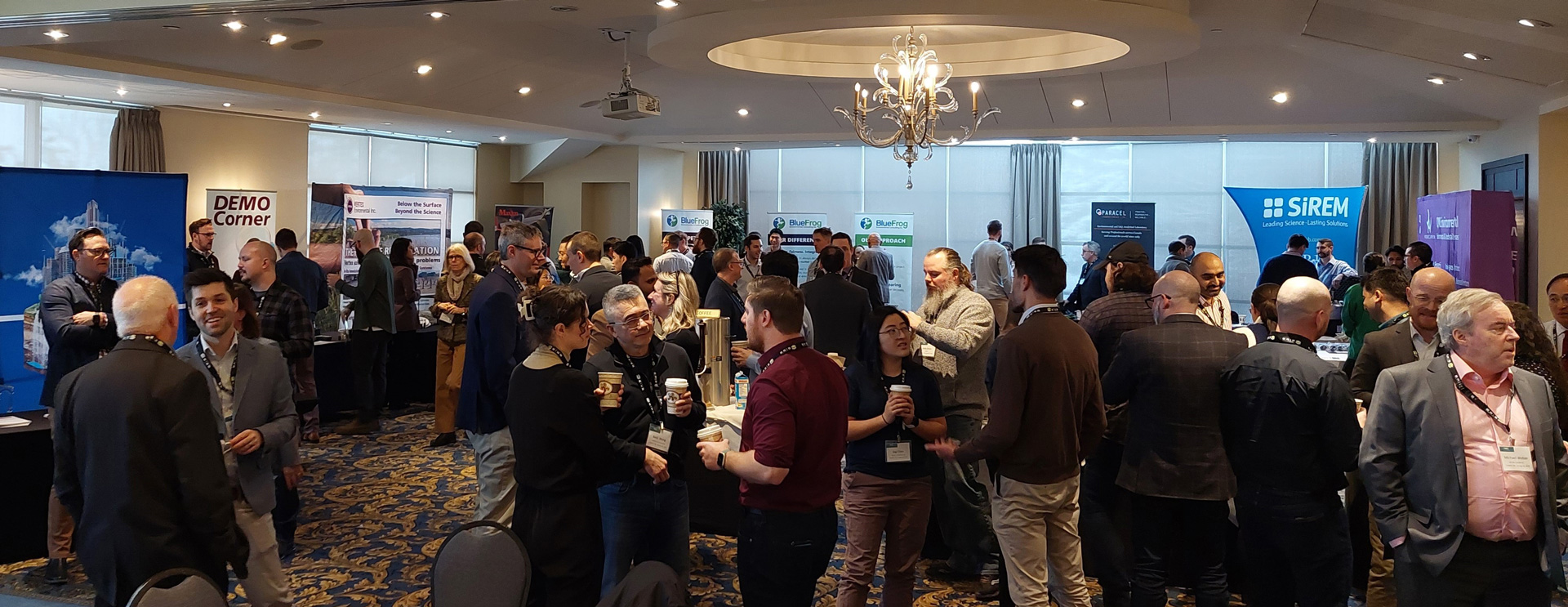
A recent SMART Remediation conference was held in Toronto on January 30th 2025. Details on the speakers and presentations are provided below.
Speakers

Sofia Herczegh,
WSP
Data Analytics Leveraged to Update a PFAS Conceptual Site Model (CSM): How Fingerprinting and Machine-Learning Tools Can Inform Site Assessment and Management
- Bio |
- Abstract
- | Presentation
Sofia Herczegh
Sofia, M.Sc., EPt, is an Environmental Scientist at WSP who applies her experience with surface water sampling, toxicity assessments, data review & interpretation, and environmental chemistry to several risk mitigation, monitoring, and site assessment projects. Her project experience includes provincial, federal, and private clients and investigation of PFAS, coal tar, chlorinated solvents, landfill leachate, and mining waste. She holds a Master of Science in Chemical & Environmental Toxicology from Carleton University and was selected as an Ontario Representative for WSP’s Global Emerging Contaminants Young Professional Committee.
Data Analytics Leveraged to Update a PFAS Conceptual Site Model (CSM): How Fingerprinting and Machine-Learning Tools Can Inform Site Assessment and Management
Sofia Herczegh M.Sc., EPt (sofia.herczegh@wsp.com)
Paul Hurst M.Sc., P.Eng., QP(ESA) (paul.hurst@wsp.com)
Skyler Sorsby, M.Sc., P.G. (skyler.sorsby@wsp.com)
Assessing per- and polyfluoroalkyl substances (PFAS) via traditional site investigation methods is complicated by the wide variety of PFAS compounds, resulting broad array of environmental fate and transport pathways, and the possibility of complex mixtures. Developing a Conceptual Site Model (CSM) at PFAS sites can introduce increased complexity and implications of off-site impacts. WSP’s in-house PFAS fingerprinting tool allows for sophisticated visualization of chemical signatures across a site, facilitating the identification of spatial trends in concentration and chemical composition by a site assessor. A valuable step in CSM development and site investigation, fingerprinting is demonstrated via multiple case studies as a method of investigating data gaps including (but not limited to) additional/unknown sources, groundwater-surface water interactions, assessment of background concentration levels, and key transport pathways.
This presentation will detail WSP’s application of fingerprinting tools and machine learning in the 2024 update of a PFAS CSM, specifically highlighting key outcomes, identified trends, and the applicability to investigations of contaminant transport to off-site receptors. Key learnings will also be presented from additional case studies where PFAS fingerprinting and machine learning were applied during CSM preparation, including in data gap analysis, development of a staged workplan, consideration of targeted remedial approach options, and applicability to investigations of source attribution.

Nick Battram,
Brenntag Canada
A Clear Path to Clean Water: Dewatering using coagulation and flocculation
- Bio |
- Abstract
- | Presentation
Nick Battram
Nick is a Water Treatment Specialist with Brenntag, and he’s responsible for the water, wastewater, and remediation industries for Ontario. Prior to joining Brenntag, Nick worked as an analytical chemist in the environmental and food industries.
A Clear Path to Clean Water: Dewatering using coagulation and flocculation
Nick Battram, Water Treatment Specialist (nicholas.battram@brenntag.com) Brenntag
Coagulation and flocculation are vital processes for managing water treatment on construction sites, where sediment and contaminants can hinder compliance with water discharge regulations, resulting in project delays and penalties.
This presentation will first examine the mechanisms of coagulation, paying particular attention to inorganic coagulants, including their various types, and criteria for selecting the most suitable one for specific scenarios. Next, we will discuss the principles of flocculation, detailing the available flocculants (or “polymers”), and how to properly prepare them before dosing.
What happens when conventional coagulation and flocculation fall short of meeting discharge limits? Participants will explore pressing questions such as: How can we achieve stringent phosphorus limits? What if the necessary flocculant make-down equipment is unavailable? How do I treat certain metals? We will introduce supplemental treatment strategies that may be necessary to address field-specific issues.

Frank Schlaefli,
Pinchin Ltd.
A Case Study – Sub-Slab Vapour Intrusion Mitigation System
- Bio |
- Abstract
- | Presentation
Frank Schlaefli
Frank Schlaefli is Pinchin’s National Soil Vapour Practice Specialist and an Operations Manager with the Environmental Due Diligence & Remediation Group based in Mississauga. He has over 17 years of experience in environmental assessment and remediation of contaminated sites. Frank graduated from the University of Agrarian La Molina -Peru in 2007 with a Bachelor of Science in Environmental Engineering. At Pinchin, Frank provides technical, business and client development initiatives through knowledge-based services in remediation with a focus on soil vapour mitigation. Frank enjoys the problem-solving aspect of the work which is one of the key skills required in the assessment and design of the soil vapour mitigation systems.
A Case Study – Sub-Slab Vapour Intrusion Mitigation System
Frank Schlaefli, B.Sc. (fschlaefli@pinchin.com) Pinchin Ltd
Pinchin Ltd. (Pinchin) was engaged to complete the design of a large-scale soil vapour intrusion mitigation system (SVIMS) in Ontario, Canada for a proposed building that was planned to be constructed in the area where a potential for vapour intrusion (VI) was present. Pinchin completed a preliminary feasibility evaluation that included feasibility and cost analysis of multiple SVIMS alternatives. Following the preliminary evaluation and the selection of the appropriate SVIMS, Pinchin prepared the design and specification package that included design calculations, detailed design drawings prepared in consultation with the client’s design-build team, and specifications for SVIMS installation. In addition, Pinchin prepared the field inspection forms, developed the QA/QC protocols for inspecting the SVIMS installation and warranty purposes, completed a final performance evaluation of the SVIMS, system commissioning and associated operations, maintenance and monitoring plans.
The SVIMS covered the entire building footprint measuring 25,000 m2 (270,000 sq ft). The SVIMS consisted of a vapour membrane, vapour collection system and vapour venting system. The vapour membrane was manufactured by E. Pro locally in Hamilton, Ontario, and consisted of a base layer HDPE membrane, followed by a 60 mil (1.2 mm) thick layer of spray-on chemical resistant membrane, followed by the protective HDPE layer, which would normally be bonded to the concrete to be poured directly above. The vapour membrane had to accommodate numerous utility penetrations that required sealing around these penetrations. This system was selected not only for its vapour performance but also for its strength and resistance against punctures. The vapour collection system of the SVIMS consisted of nearly 2,000 linear m (21,500 linear ft) of slotted soil vapour collection pipe embedded in a layer of gravel. The vapour venting system of the SVIMS consisted of six soil vapour extraction points connected to 6 inline fans venting to the atmosphere at the roof.
One of the largest challenges was adhering to a dynamic schedule and working in concert with the gravel supply contractors, utility contractors, and coordinating the timing of installation before the numerous concrete pours the project underwent. This project was completed in 3 months and is known as one of the largest commercial SVIMSs in Canada.
After the SVIMS commissioning, Pinchin has been completing on-going monitoring of the indoor air quality and no exceedances to the applicable indoor criteria has been identified. The indoor air results conclude that the SVIMS is performing as designed and the risk to human health via the vapour inhalation pathway has been mitigated at the Site. Further consultation with the MECP, a reduction in the sampling frequency and scope was realized due to the robustness and performance of the SVIMS.

Matt Geary,
CETCO
Treating PFAS: Lessons Learned and the Evolution of High-Pressure In Situ Injection of Fluoro-Sorb
- Bio |
- Abstract
- | Presentation
Matt Geary
Education: B.S. Environmental Resources Management ‐ Pennsylvania State University, State College PA Background: Mr. Geary has over thirty (37) years of experience in the environmental consulting/construction industry, ranging from his role as a site superintendent for one of the nation’s largest remedial construction firms to managing a remediation estimating department and serving as a Vice President of a mid‐sized environmental consulting firm.
Treating PFAS: Lessons Learned and the Evolution of High-Pressure In Situ Injection of Fluoro-Sorb
Derek Pizarro (dpizarro@astenv.com) (AST Environmental, West Chester, PA, USA)
Matt Geary (matt.geary@mineralstech.com) (CETCO, New York, NY, USA)
Mitch Brandon (mitch.brandon@mineralstech.com) (CETCO, New York, NY, USA)
Mike Mazzarese (mmazzarese@astenv.com) (AST Environmental, Golden, CO, USA)
Background: Utilization of common adsorbents for the remediation of Per- and Polyfluorinated Substances (PFAS) in situ has generally been limited to liquid activated carbon (LAC), also known as colloidal activated carbon (CAC), biochar, or conventional pump and treat systems (ex situ treatment). FLUORO-SORB® is a novel product that can be injected in situ using high energy installation techniques, techniques refined for almost 20 years using larger-grain size particles (e.g. PAC, GAC).
FLUORO-SORB is manufactured by modifying bentonite clay in a specific, proprietary process. The final product has high sorption kinetics, significant sorption capacity, and can be used with other reactants and reagents in the subsurface, in most cases without detrimental interaction or competitive adsorption for PFAS contaminants. Designs can be generated that allow for multi-stage deployment in situ with specialized sorbents with mechanisms for chlorinated volatile organic compounds (CVOCs) and emergent contaminants. This abstract discusses the deployment of FLUORO-SORB via injection techniques as a demonstration to prove the injectability of with this technology for PFAS sequestration.
Approach: In bench scale and university testing, FLUORO-SORB was comparatively assessed with ion exchange resin (IX), GAC, and biochar. In addition, competitive adsorption was tested with co-contaminants such as CVOCs and petroleum hydrocarbons (PHCs).
Until recently, environmental practitioners assumed that FLUORO-SPORB was not deployable without using conventional soil mixing or civil construction techniques. However, overburden injection of slurries of FLUORO-SORB can be completed using direct-push technology (DPT) and highly specialized slurry batching and injection equipment. In addition, CETCO Has developed a dosing calculation tool to allow for accurate project cost estimation.
Results/Lessons Learned: The focus of this presentation will be on a comparison of historical methodologies with recent improvements to techniques and approaches to overburden, transition zone/saprolite, and consolidated lithologies in-situ remediation. Improvements to overburden injection methodologies will be discussed and highlight the use of highly flexible overburden remediation units (high pressure/high flow) combined with unique downhole tooling and field installation protocols to allow expert installation of this injectate.
The field-scale demonstration study will highlight and illustrate the development focused surgical in-situ remediation techniques and discuss quantified high density CSMs for success in the field. Lessons learned and relevant data to be presented related to sorption chemistry and installation.

Trevor Janzen,
Terrapex
Environmental – Can’t we just Check Off that Box? – Perspectives from a Developer and a Consultant
- Bio |
- Abstract
- | Presentation
Trevor Janzen
Senior Environmental Consultant, technical advisor, and project director with 25 years of environmental investigation and remediation experience serving the public and private sectors in Canada. Experienced in building, leading and managing diverse teams of hydrogeologists, engineers and scientists. Strong background in strategic planning, operations, business development, employee performance and technical training.
A professional geoscientist (limited), chartered chemist, and a registered qualified person (QPESA), under Ontario Ministry of Environment Conservation and Parks (MECP) Reg 153/04 (as amended).
Skilled at growing positive relationships with clients and colleagues at all organizational levels; and managing multiple objectives, priorities, deadlines and budgets for all stages of environmental projects to provide high quality services to clients in a fast-paced environment.
Enjoy researching new remediation techniques. Develops innovative remediation strategies that use a combination of the most cost-effective remediation and risk management approaches that meet cleanup objectives resulting in significant cost and time savings to clients over conventional remediation strategies. Managed remediation of several complex sites that were major projects with budgets between $1 million and $ 4 million. Site closure has been successfully achieved at a number of sites by filing RSCs.
Environmental – Can’t we just Check Off that Box? – Perspectives from a Developer and a Consultant
Trevor Janzen, Senior Environmental Consultant, Terrapex
Many developers see environmental, the process of obtaining RSCs including Remediation / Risk Assessment program, as checking off a box and have limited ideas about all the things that can go wrong and delay the RSC. We will share insight on developers and consultants thought processes on why do we need an RSC?…provincial, municipality and stakeholder drivers. Using two case studies, we will go through both common and unique challenges related to what can stall RSCs. Attendees will learn about:
- a collaborative process to better understand developer’s objectives and business drivers
- what can be done proactively to develop strategies to eliminate surprises if the RSC is stalled;
- practical strategies and solutions to get RSCs and still meet developers’ project goals.
Case Study 1 – Why is this taking so long? What non-Remediation factors can stall RSCs? Now What?
Case Study 2 – Why is this taking so long? What Remediation factors can stall RSCs? Now What?

Albert Ho,
First Capital REIT
Environmental – Can’t we just Check Off that Box? – Perspectives from a Developer and a Consultant
- Bio |
- Abstract
- | Presentation
Albert Ho
Albert Ho, M.Eng, P.Eng, MBA, CRM, First Capital REIT Albert Ho is the Senior Director of Environmental Programs at First Capital REIT, a role he has held for over a decade. In this capacity, he provides strategic leadership to manage environmental risk and ensure compliance on a national scale. Albert’s responsibilities include securing Records of Site Condition (RSC) to support key business objectives, such as property development initiatives. A licensed professional engineer, Albert brings over 20 years of expertise in environmental risk management, site investigation and remediation, insurance, and sustainability. His career spans both consulting and industry roles, including experience in real estate and manufacturing sectors.
Environmental – Can’t we just Check Off that Box? – Perspectives from a Developer and a Consultant
Albert Ho, M.Eng, P.Eng, MBA, CRM (albert.ho@fcr.ca) First Capital REIT
Many developers see environmental, the process of obtaining RSCs including Remediation / Risk Assessment program, as checking off a box and have limited ideas about all the things that can go wrong and delay the RSC. We will share insight on developers and consultants thought processes on why do we need an RSC?…provincial, municipality and stakeholder drivers. Using two case studies, we will go through both common and unique challenges related to what can stall RSCs. Attendees will learn about:
- a collaborative process to better understand developer’s objectives and business drivers
- what can be done proactively to develop strategies to eliminate surprises if the RSC is stalled;
- practical strategies and solutions to get RSCs and still meet developers’ project goals.
Case Study 1 – Why is this taking so long? What non-Remediation factors can stall RSCs? Now What?
Case Study 2 – Why is this taking so long? What Remediation factors can stall RSCs? Now What?

Scott Thompson,
PSPC
FCSAP Phase V Demand Forecast 2025 - 2030
- Bio |
- Abstract
- | Presentation
Scott Thompson
Scott Thompson holds a bachelor of Environmental Science Degree from the University of Manitoba and has 18 years experience in the Contaminated Sites, Greening and Sustainability and Client Service business lines. Scott manages the Risk Assessment Project Delivery Team at Public Services and Procurement Canada (PSPC), Environmental Services and Contaminated Sites (ESCS) Directorate in Ontario Region and is the national co-chair of PSPC’s Federal Contaminated Sites Action Plan (FCSAP) Expert Support Team. Scott has successfully managed Contaminated Sites Assessment, Risk Assessment and Remediation Projects in urban and remote locations, including projects in the Yukon, NWT, the Prairie Provinces, and Ontario. Scott has experience as a Client Service Director for the “Science Cluster” and managed the Greening and Sustainability team at PSPC, implementing the Greening Government Strategy in Ontario.
FCSAP Phase V Demand Forecast 2025 - 2030
Scott Thompson (scott.r.thompson@tpsgc-pwgsc.gc.ca) Public Services and Procurement Canada
The Federal Contaminated Sites Action Plan (FCSAP) is a government-wide program led by Environment and Climate Change Canada, to reduce risks to human health and the environment and associated financial liabilities. In Budget 2024, FCSAP was renewed with funding of $1.6 billion for 2025-2030. This presentation will provide an overview of FCSAP nationally and regionally (Ontario), as well as the current forecasts for private sector support starting April 1, 2025. We will also discuss the various procurement approaches, including ways to encourage participation of Indigenous companies and highlighting ways for companies to bid on Federal Contaminated Sites contracts.

Shannon Adams,
Canderel
Economic Panel: Discussing Our Industry Now and into the Future
- Bio |
Shannon Adams
Having started in the construction industry in 2006, Shannon has years of development management and construction project management experience; initially as Site Clerk onsite, then through roles as Project Coordinator, Project Manager, Development Manager, and currently Senior Director, Project & Development Services at Canderel, for all new mixed use high-rise residential condo construction in Toronto.
Economic Panel: Discussing Our Industry Now and into the Future

Nicholas Doucette,
QM
Economic Panel: Discussing Our Industry Now and into the Future
- Bio |
Nicholas Doucette
Nicholas Doucette, P.Eng., is an environmental contractor that is a passionate advocate for innovation in the pursuit of safer, more sustainable environmental and remediation projects. He is responsible for various groups delivering complex, large, and sensitive projects across Canada in the marine, civil, climate resiliency, specialty construction, and environmental technologies. Mr. Doucette has been with QM for over 11 years and has worked on projects from coast to coast including some of Canada’s largest environmental projects such as Sydney Tar Ponds, Port Lands, Port Hope, Rock Bay, and Esquimalt Harbour portfolios.
Economic Panel: Discussing Our Industry Now and into the Future

Pete Craig,
VEI Contracting
Economic Panel: Discussing Our Industry Now and into the Future
- Bio |
Pete Craig
Pete Craig, M.Sc., PChem, has over 20 years of experience in environmental remediation contracting and consulting with projects up to $200M in value. Through hands-on experience in environmental sector M&A analysis, and unique perspectives, such as the management of one of VEI’s international joint ventures, Pete’s got plenty of data – and even more questions – on the regulatory, professional practice and economic factors influencing our industry.
Economic Panel: Discussing Our Industry Now and into the Future

Paresh Patel,
Pinchin
Economic Panel: Discussing Our Industry Now and into the Future
- Bio |
Paresh Patel
Economic Panel: Discussing Our Industry Now and into the Future

Phil Dennis,
SiREM
Permeable Reactive Barriers (PRBs), a Sustainable Approach for Groundwater Remediation
- Bio |
- Abstract
- | Presentation
Phil Dennis
Phil Dennis is a Senior Principal Scientist and founding member of SiREM in Guelph, Ontario. Phil holds an M.A.Sc., in Civil Engineering from the University of Toronto and an Honours B.Sc., Molecular Biology and Genetics from the University of Guelph. Phil has over 30 years of experience in research and development and management of molecular biology, microbiology, and environmental remediation laboratories. Phil currently directs molecular genetic testing services and is innovation lead for SiREM’s research and development program contributing to multiple ongoing research and development projects.
Permeable Reactive Barriers (PRBs), a Sustainable Approach for Groundwater Remediation
Phil Dennis, Larissa Smith, Corey Scales and Jeff Roberts, SiREM Guelph, ON
A permeable reactive barrier (PRB) is an underground permeable “wall” containing material that treats groundwater contaminants passing through it, including chlorinated solvents, petroleum hydrocarbons, metals, PFAS, and nutrients. Major advantages of PRBs are:
1) low cost, as entire plume treatment is not required and it can be targeted to the property boundary 2) mostly passive and do not require mechanical systems for pumping or amending groundwater, 3) installation and operation is minimally disruptive and suitable for use at active facilities.
One common PRB configuration is the filled trench containing a permeable substrate such as sand or gravel mixed with solid amendments, including zero-valent Iron (ZVI), oxidants, biochar, zeolite, appatite, chitin or low-cost local materials such as wood mulch. In some cases, the substrates are bioaugmented with beneficial microbes. Depending on the contaminant, groundwater is treated in the PRB via various processes including reduction, oxidation, sorption and precipitation via biotic and or abiotic pathways. Another common PRB configuration uses injection wells or direct push points with overlapping radiuses of influence to transect the plume. These types of PRBs are suitable for injectable treatment amendments including electron donors/acceptors, nutrients, microbes, oxidants, oxygen release compounds and sorbents such as colloidal activated carbon. Compared to trenches, injection transect PRBs can be less disruptive to install, do not produce excavation wastes and can be maintained by reinjection of amendments.
Design considerations for implementation of PRBs include, choice of amendments, establishing correct design thickness, minimizing fouling and passivation, preventing short circuiting of groundwater flow and estimating the lifespan of the installed barrier. Laboratory column studies can be used to evaluate these key design parameters on a site-specific basis. Post-installation monitoring ensures establishment of the correct geochemical conditions and microbial populations and that degradation rates are sufficient for effective treatment of the contaminant flux.
This presentation will provide case studies for different PRB configurations to treat chlorinated solvents including a full-scale emulsified vegetable oil (EVO) KB-1 bioaugmented bio-barrier application, a combined bio-ZVI barrier, and an overview of wood mulch PRB performance.

Kerry-Anne Pumphrey,
Blue Frog Consulting
Managing, Assessing, and Presenting Imperfect Chlorinated Solvent Data in Support of Environmental Litigation
- Bio |
- Abstract
- | Presentation
Kerry-Anne Pumphrey
Kerry-Anne Pumphrey is a senior project manager with 20 years of experience in managing contaminated sites and client portfolios across Canada. She has extensive experience with subsurface impacts caused by petroleum hydrocarbons, chlorinated solvents, heavy metals, and road salts. Kerry-Anne’s extensive contaminated sites experience has involved hydrogeological modelling to assist in determining the fate and transport of groundwater contaminants. She has experience in using statistical data analysis to assess plume stability and to support long-term monitoring programs. Kerry-Anne provides technical support for in-situ remediation programs, management of chlorinated solvent impacted sites, hydrogeology, and excess soils management. Thinking outside of the box and understanding client business drivers and effectively communicating complicated projects to stakeholders are her strengths. In addition to contaminated sites work, Kerry-Anne has assisted with geotechnical assessments and has managed physical hydrogeological assessments in support of construction projects and property redevelopment throughout Ontario.
Managing, Assessing, and Presenting Imperfect Chlorinated Solvent Data in Support of Environmental Litigation
Kerry-Anne Pumphrey (kpumphrey@bluefrogconsulting.ca) BlueFrog Environmental Consulting Inc. Oakville
Consultants are often called upon to support litigation cases for chlorinated solvent plumes. The data sets provided to consultants at the on-set of a litigation project are often not the ideal data set where soil and/or groundwater samples are collected from within the required hydrostratigraphic units; the well screens straddle multiple units and groundwater samples were not collected at the same time of year using the same sampling methodology. Usually, the consultant looks at the data and wishes things were done differently and they want to obtain more data using a consistent [and accepted] methodology. How does a consultant do this you ask? By taking the information they do have and supplementing it with knowledge and understanding of how chlorinated solvent plumes migrate over time and space, using available geological/ hydrogeological mapping, and investing a lot of time honing imperfect data into a format that can be presented to the legal team and the client. At the end of the day, you can sometimes convince the legal team and the client that obtaining additional data would help support their case and sometimes that is just not possible.
This presentation will examine the data sets from several different litigation cases where the chlorinated solvent data that was provided was less than perfect. Each case has a different level of data quality and quantity and is located within different geological areas in Southern Ontario and would have one or more potential contaminant sources. The approaches used to manage and assess the data are comprised of the following:
- Extracting data from third party reports and organizing it so that the extent of the chlorinated solvent plume(s) is understood.
- Developing a conceptual site model (CSM) to understand the subsurface conditions at each site.
- Examining the change in contaminant concentrations over time by using statistical analysis in addition to assessing the change in concentration of the initial contaminant(s) in relation to their breakdown products.
- Assessing the spatial distribution of contaminations within different hydrostratigraphic units over time.
The results from taking poor data sets and transforming them into something that can be presented visually to a legal team and client and presented in a way that your findings can be understood by everyone will be provided. Evaluation of the data sets will include supporting or refuting consultant findings and opinions and finding flaws within the data sets prior to presenting the information to a client. One of the key take aways will be that your initial understanding of the site/contaminant plume could be challenged and you may have thought “X” about your site, contaminant plume, etc. but after multiple rounds of groundwater monitoring and sampling, installation of additional monitoring wells across the site within different hydrostratigraphic layers, your understanding changes and the CSM changes and this new understanding needs to be presented to the legal team for evaluation and consideration in the next phase of litigation.

Marc McAree,
Willms & Shier Environmental Lawyers LLP
The Current Patchwork of PFAS Regulation Across Canada Explained
- Bio |
- Abstract
- | Presentation
Marc McAree
Marc McAree, B.A. (Hons.), LL.B., M.E.S., is a partner at Willms & Shier Environmental Lawyers LLP and certified as a Specialist in Environmental Law by the Law Society of Ontario.
Marc provides advice and solutions to a wide range of clients to overcome their environmental law and litigation issues. Marc has significant environmental law expertise in contaminated land/brownfields clean ups, transactions and litigation, and environmental compliance and approvals. Marc also helps clients reduce and manage environmental risks and liabilities.
Marc is recognized for his excellence representing clients in environmental civil litigation at all levels of Ontario Courts, defence of clients against environmental regulatory prosecutions, and appearances before the Ontario Land Tribunal and other administrative law decision-makers on appeals and other hearings. Marc has particular experience litigating soil and groundwater contaminant impacts, nuisance and odour issues.
Marc is named in the 2025 Lexpert/American Lawyer Guide To The Leading 500 Lawyers in Canada. He is peer selected annually for inclusion in the Best Lawyers in Canada for environmental law. Marc was named “Environmental Lawyer of the Year” for 2019 in Toronto by the Best Lawyers in Canada. Marc is also ranked “Most Frequently Recommended” by the Canadian Legal Lexpert Directory and ranked “AV Preeminent” by peers in Martindale-Hubbell. He is also named annually in both the international Who’s Who Legal—Environment and Who’s Who Legal—Canada. Marc is called to the Bars of Ontario and British Columbia.
The Current Patchwork of PFAS Regulation Across Canada Explained
Marc McAree, Partner, LSO Certified Specialist in Environmental Law (mmcaree@willmsshier.com) Willms & Shier Environmental Lawyers LLP
A pressing environmental concern: the regulation of per- and polyfluoroalkyl substances, commonly known as PFAS! These synthetic chemicals, often referred to as “forever chemicals,” are pervasive in our environment. They are linked to serious health issues, including cancer and immune system disruption.
In Canada, Environment and Climate Change Canada recognizes the importance of addressing PFAS contamination. PFOS and PFOA are listed as toxic substances in CEPA, Schedule 1 – otherwise known as the Toxic Substances List. PFAS is at the proposed risk management phase of a Chemicals Management Plan that aims to assess and manage chemicals. Health Canada has developed a maximum acceptable concentration guideline (not law) for PFOA (200 ng/L) and PFOS (600 ng/L) in drinking water and additional screening values for PFAS-related substances. British Columbia and Alberta regulate PFOS and PFOA under their respective contaminated sites frameworks. B.C. also lists PFAS as emerging contaminants of concern in its Design Guidelines for Drinking Water Systems in British Columbia, which are used in waterworks approvals processes. In Nova Scotia, recent initiatives prioritize the assessment of PFAS contamination in drinking water sources. Public Health Ontario has published a “Focus On” bulletin about PFAS, which provides an overview of exposure risks and human health effects, with focus on drinking water.
Marc McAree will discuss the patchwork of PFAS regulation across Canada, and implications for environmental clean-ups and environmental litigation!