
Ottawa
SMART Remediation talks have focused on innovative technologies for remediating contaminated sites, approaches for site characterization, project case studies, regulatory and industry perspectives, and other related topics.
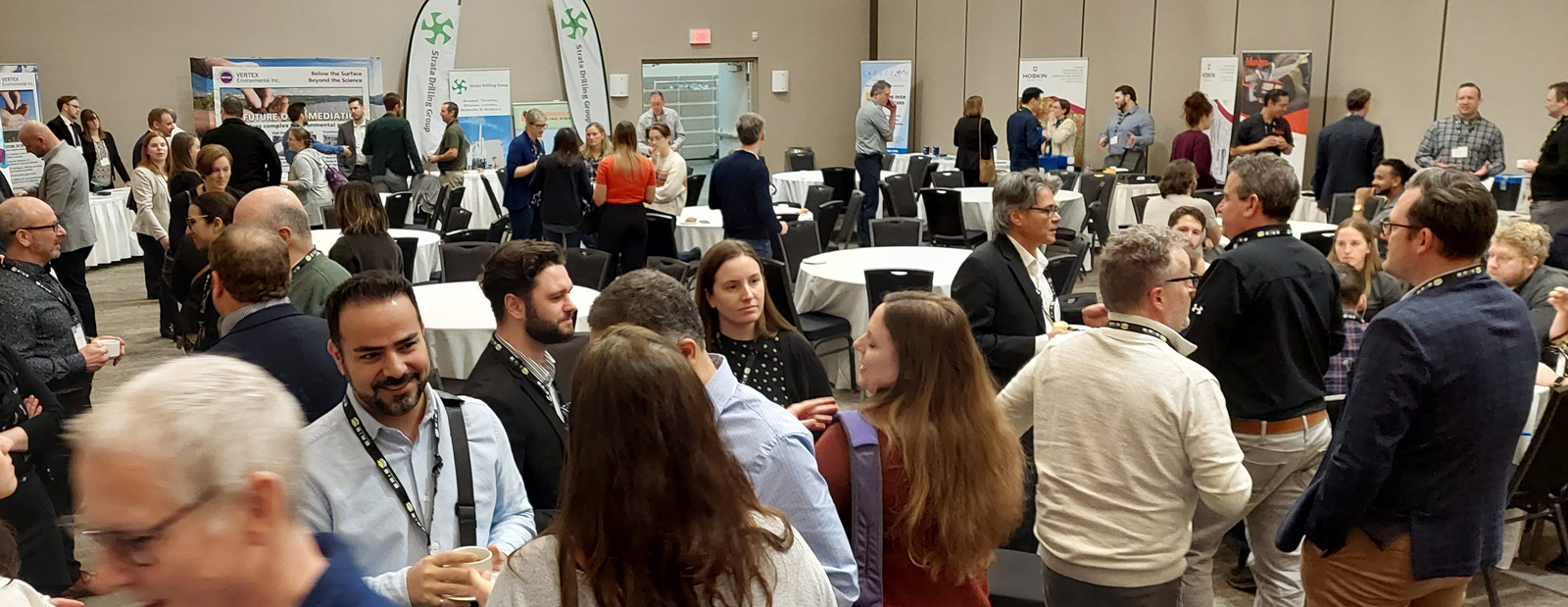
A recent SMART Remediation conference was held in Ottawa on February 6th 2025. Details on the speakers and presentations are provided below.
Speakers

Paul Hurst,
WSP
Bolstering your Conceptual Model with Machine Learning and Artificial Intelligence: A Review of Key Methods and Case Study on Metal and PAH impacts in Sediment From a Public Dataset
- Bio |
- Abstract
- | Presentation
Paul Hurst
Paul Hurst, Principal Senior Environmental Engineer at WSP’s, brings over 17 years of expertise in environmental site assessments, monitoring, and remediation. Specializing in advanced data analytics and machine learning to enhance source identification and conceptual site models.
Bolstering your Conceptual Model with Machine Learning and Artificial Intelligence: A Review of Key Methods and Case Study on Metal and PAH impacts in Sediment From a Public Dataset
Paul Hurst M.Sc., P.Eng, QP(ESA) (paul.hurst@wsp.com)
Skyler Sorsby, Consultant, Geologist (skyler.sorsby@wsp.com)
Machine learning can be leveraged to help manage large multivariate datasets, provide insights and establish additional lines of evidence to help improve conceptual site models and manage contaminated sites. By employing multiple machine learning methods, assessment of background levels, fate-and-transport patterns, identification of potential sources and evaluation of how those sources may be migrating and mixing across the Site can be evaluated.
A new fingerprinting tool developed by WSP combines robust algorithms to characterize impacts on contaminated sites and assist in site management. Key tools used include 1) nonnegative matrix factorization which performs blind-source separation of different signatures and can estimate both their chemical profiles and highlight spatial hot spots; and 2) clustering algorithms to partition the site into zones of similar impacts that may be used to target further site investigation and remediation. A novel spatially informed clustering algorithm also allows both chemical signatures and geography to inform clustering which is highly useful for large sites. Finally, Explainable Artificial Intelligence (XAI) can be used to investigate the influence of geochemical and physical features on machine learning (model) outputs and to assess their relative importance. XAI techniques helps by offering insights into how different environmental features contribute to the results.
This talk will review the approach, highlight key aspects and benefits of tools used and provide a case study on metal and polycyclic aromatic hydrocarbons (PAH) sediment impacts from a public dataset.

Tom Li,
Parsons
Destruction of PFAS Using A Novel Approach To Catalyzed Chemical Oxidation
- Bio |
- Abstract
- | Presentation
Tom Li
Professional Doer-Seller with expertise in providing business and technical solutions to environmental issues to industrial and public sector clients; from advice to construction. 20+ years of expertise in soil/groundwater/waste remediation and management for contaminated sites and infrastructure projects.
Experience in numerous industries including water/wastewater, environmental remediation, chemical processing, oil and gas and aquaculture industries; in R&D, BD, consulting, and management roles. Proven ability to quickly understand the technical aspects of any industry. Unique ability to connect the technical knowledge with big picture business goals and strategies.
Destruction of PFAS Using A Novel Approach To Catalyzed Chemical Oxidation
Per- and polyfluoroalkyl substances (PFAS) are difficult to address in natural media and tend to be highly recalcitrant in the environment. Our objective is to develop a low cost means to address PFAS impacts in soil and groundwater by destroying PFAS mass, either ex situ or in situ. Parsons has developed an innovative means to destroy PFAS in soil and groundwater in in-situ and ex-situ settings by combining a small temperature rise, a metal-based catalyst, and off-the-shelf oxidant products. This patent-pending methodology, called Hot ISCO, has been demonstrated to degrade PFAS to non-toxic end products fluoride, salts, and carbon dioxide. Parsons developed this technology through laboratory work, field pilots, and approximately 40 individual lab and field trials. Hot ISCO achieved PFAS destruction efficiencies in the laboratory of greater than 99.9% within method detection limits and greater than 90% destruction efficiency during large volume mixed matrix ex-situ field trials. To date we have completed mixed matrix (soil and groundwater) trials using PFAS contaminated matrices from client sites in Michigan, New York, New Jersey, and North Carolina. The results and lessons learned from four years of research and development will be presented.

Matt Geary,
CETCO
Treating PFAS: Lessons Learned and the Evolution of High-Pressure In Situ Injection of Fluoro-Sorb
- Bio |
- Abstract
- | Presentation
Matt Geary
Education: B.S. Environmental Resources Management ‐ Pennsylvania State University, State College PA Background: Mr. Geary has over thirty (37) years of experience in the environmental consulting/construction industry, ranging from his role as a site superintendent for one of the nation’s largest remedial construction firms to managing a remediation estimating department and serving as a Vice President of a mid‐sized environmental consulting firm.
Treating PFAS: Lessons Learned and the Evolution of High-Pressure In Situ Injection of Fluoro-Sorb
Derek Pizarro (dpizarro@astenv.com) (AST Environmental, West Chester, PA, USA)
Matt Geary (matt.geary@mineralstech.com) (CETCO, New York, NY, USA)
Mitch Brandon (mitch.brandon@mineralstech.com) (CETCO, New York, NY, USA)
Mike Mazzarese (mmazzarese@astenv.com) (AST Environmental, Golden, CO, USA)
Background: Utilization of common adsorbents for the remediation of Per- and Polyfluorinated Substances (PFAS) in situ has generally been limited to liquid activated carbon (LAC), also known as colloidal activated carbon (CAC), biochar, or conventional pump and treat systems (ex situ treatment). FLUORO-SORB® is a novel product that can be injected in situ using high energy installation techniques, techniques refined for almost 20 years using larger-grain size particles (e.g. PAC, GAC).
FLUORO-SORB is manufactured by modifying bentonite clay in a specific, proprietary process. The final product has high sorption kinetics, significant sorption capacity, and can be used with other reactants and reagents in the subsurface, in most cases without detrimental interaction or competitive adsorption for PFAS contaminants. Designs can be generated that allow for multi-stage deployment in situ with specialized sorbents with mechanisms for chlorinated volatile organic compounds (CVOCs) and emergent contaminants. This abstract discusses the deployment of FLUORO-SORB via injection techniques as a demonstration to prove the injectability of with this technology for PFAS sequestration.
Approach: In bench scale and university testing, FLUORO-SORB was comparatively assessed with ion exchange resin (IX), GAC, and biochar. In addition, competitive adsorption was tested with co-contaminants such as CVOCs and petroleum hydrocarbons (PHCs).
Until recently, environmental practitioners assumed that FLUORO-SPORB was not deployable without using conventional soil mixing or civil construction techniques. However, overburden injection of slurries of FLUORO-SORB can be completed using direct-push technology (DPT) and highly specialized slurry batching and injection equipment. In addition, CETCO Has developed a dosing calculation tool to allow for accurate project cost estimation.
Results/Lessons Learned: The focus of this presentation will be on a comparison of historical methodologies with recent improvements to techniques and approaches to overburden, transition zone/saprolite, and consolidated lithologies in-situ remediation. Improvements to overburden injection methodologies will be discussed and highlight the use of highly flexible overburden remediation units (high pressure/high flow) combined with unique downhole tooling and field installation protocols to allow expert installation of this injectate.
The field-scale demonstration study will highlight and illustrate the development focused surgical in-situ remediation techniques and discuss quantified high density CSMs for success in the field. Lessons learned and relevant data to be presented related to sorption chemistry and installation.

Trevor Janzen,
Terrapex
Environmental – Can’t we just Check Off that Box? – Perspectives from a Developer and a Consultant
- Bio |
- Abstract
- | Presentation
Trevor Janzen
Senior Environmental Consultant, technical advisor, and project director with 25 years of environmental investigation and remediation experience serving the public and private sectors in Canada. Experienced in building, leading and managing diverse teams of hydrogeologists, engineers and scientists. Strong background in strategic planning, operations, business development, employee performance and technical training.
A professional geoscientist (limited), chartered chemist, and a registered qualified person (QPESA), under Ontario Ministry of Environment Conservation and Parks (MECP) Reg 153/04 (as amended).
Skilled at growing positive relationships with clients and colleagues at all organizational levels; and managing multiple objectives, priorities, deadlines and budgets for all stages of environmental projects to provide high quality services to clients in a fast-paced environment.
Enjoy researching new remediation techniques. Develops innovative remediation strategies that use a combination of the most cost-effective remediation and risk management approaches that meet cleanup objectives resulting in significant cost and time savings to clients over conventional remediation strategies. Managed remediation of several complex sites that were major projects with budgets between $1 million and $ 4 million. Site closure has been successfully achieved at a number of sites by filing RSCs.
Environmental – Can’t we just Check Off that Box? – Perspectives from a Developer and a Consultant
Many developers see environmental, the process of obtaining RSCs including Remediation / Risk Assessment program, as checking off a box and have limited ideas about all the things that can go wrong and delay the RSC. We will share insight on developers and consultants thought processes on why do we need an RSC?…provincial, municipality and stakeholder drivers. Using two case studies, we will go through both common and unique challenges related to what can stall RSCs. Attendees will learn about:
- a collaborative process to better understand developer’s objectives and business drivers
- what can be done proactively to develop strategies to eliminate surprises if the RSC is stalled;
- practical strategies and solutions to get RSCs and still meet developers’ project goals.
Case Study 1 – Why is this taking so long? What non-Remediation factors can stall RSCs? Now What?
Case Study 2 – Why is this taking so long? What Remediation factors can stall RSCs? Now What?

Albert Ho,
First Capital REIT
Environmental – Can’t we just Check Off that Box? – Perspectives from a Developer and a Consultant
- Bio |
- Abstract
- | Presentation
Albert Ho
Albert Ho, M.Eng, P.Eng, MBA, CRM, First Capital REIT Albert Ho is the Senior Director of Environmental Programs at First Capital REIT, a role he has held for over a decade. In this capacity, he provides strategic leadership to manage environmental risk and ensure compliance on a national scale. Albert’s responsibilities include securing Records of Site Condition (RSC) to support key business objectives, such as property development initiatives. A licensed professional engineer, Albert brings over 20 years of expertise in environmental risk management, site investigation and remediation, insurance, and sustainability. His career spans both consulting and industry roles, including experience in real estate and manufacturing sectors.
Environmental – Can’t we just Check Off that Box? – Perspectives from a Developer and a Consultant
Albert Ho, M.Eng, P.Eng, MBA, CRM (albert.ho@fcr.ca) First Capital REIT
Many developers see environmental, the process of obtaining RSCs including Remediation / Risk Assessment program, as checking off a box and have limited ideas about all the things that can go wrong and delay the RSC. We will share insight on developers and consultants thought processes on why do we need an RSC?…provincial, municipality and stakeholder drivers. Using two case studies, we will go through both common and unique challenges related to what can stall RSCs. Attendees will learn about:
- a collaborative process to better understand developer’s objectives and business drivers
- what can be done proactively to develop strategies to eliminate surprises if the RSC is stalled;
- practical strategies and solutions to get RSCs and still meet developers’ project goals.
Case Study 1 – Why is this taking so long? What non-Remediation factors can stall RSCs? Now What?
Case Study 2 – Why is this taking so long? What Remediation factors can stall RSCs? Now What?

Scott Thompson,
PSPC
FCSAP Phase V Demand Forecast 2025 - 2030
- Bio |
- Abstract
- | Presentation
Scott Thompson
Scott Thompson holds a bachelor of Environmental Science Degree from the University of Manitoba and has 18 years experience in the Contaminated Sites, Greening and Sustainability and Client Service business lines. Scott manages the Risk Assessment Project Delivery Team at Public Services and Procurement Canada (PSPC), Environmental Services and Contaminated Sites (ESCS) Directorate in Ontario Region and is the national co-chair of PSPC’s Federal Contaminated Sites Action Plan (FCSAP) Expert Support Team. Scott has successfully managed Contaminated Sites Assessment, Risk Assessment and Remediation Projects in urban and remote locations, including projects in the Yukon, NWT, the Prairie Provinces, and Ontario. Scott has experience as a Client Service Director for the “Science Cluster” and managed the Greening and Sustainability team at PSPC, implementing the Greening Government Strategy in Ontario.
FCSAP Phase V Demand Forecast 2025 - 2030
Scott Thompson (scott.r.thompson@tpsgc-pwgsc.gc.ca) Public Services and Procurement Canada
The Federal Contaminated Sites Action Plan (FCSAP) is a government-wide program led by Environment and Climate Change Canada, to reduce risks to human health and the environment and associated financial liabilities. In Budget 2024, FCSAP was renewed with funding of $1.6 billion for 2025-2030. This presentation will provide an overview of FCSAP nationally and regionally (Ontario), as well as the current forecasts for private sector support starting April 1, 2025. We will also discuss the various procurement approaches, including ways to encourage participation of Indigenous companies and highlighting ways for companies to bid on Federal Contaminated Sites contracts.

Jean Paré,
Chemco
Economic Panel: Discussing Our Industry Now and into the Future
- Bio |
Jean Paré
Experienced Vice President Sales Marketing with a demonstrated history of working in the chemicals industry. Strong sales professional skilled in Analytical Skills, Environmental Compliance, Water Treatment, Soil, and Environmental Awareness.
Economic Panel: Discussing Our Industry Now and into the Future

Pete Craig,
VEI Contracting
Economic Panel: Discussing Our Industry Now and into the Future
- Bio |
Pete Craig
Pete Craig, M.Sc., PChem, has over 20 years of experience in environmental remediation contracting and consulting with projects up to $200M in value. Through hands-on experience in environmental sector M&A analysis, and unique perspectives, such as the management of one of VEI’s international joint ventures, Pete’s got plenty of data – and even more questions – on the regulatory, professional practice and economic factors influencing our industry.
Economic Panel: Discussing Our Industry Now and into the Future

Craig Wells,
Parsons
Economic Panel: Discussing Our Industry Now and into the Future
- Bio |
Craig Wells
As Vice President, Business Development, in the Energy and Environment Sector of Parsons, I bring a high level of service, engagement, and innovation by offering collaborative solutions to the challenging problems of liability reduction, environmental management, infrastructure resilience, sustainable energy and resources, and life-cycle site management from coast to coast to coast. I look forward to forging new relationships that create new and unexpected opportunities, value, and results, supported by Parson’s global network of professionals in every discipline.
Economic Panel: Discussing Our Industry Now and into the Future

Nicholas Doucette,
QM
Economic Panel: Discussing Our Industry Now and into the Future
- Bio |
Nicholas Doucette
Nicholas Doucette, P.Eng., is an environmental contractor that is a passionate advocate for innovation in the pursuit of safer, more sustainable environmental and remediation projects. He is responsible for various groups delivering complex, large, and sensitive projects across Canada in the marine, civil, climate resiliency, specialty construction, and environmental technologies. Mr. Doucette has been with QM for over 11 years and has worked on projects from coast to coast including some of Canada’s largest environmental projects such as Sydney Tar Ponds, Port Lands, Port Hope, Rock Bay, and Esquimalt Harbour portfolios.
Economic Panel: Discussing Our Industry Now and into the Future

Phil Dennis,
SiREM
Permeable Reactive Barriers (PRBs), a Sustainable Approach for Groundwater Remediation
- Bio |
- Abstract
- | Presentation
Phil Dennis
Phil Dennis is a Senior Principal Scientist and founding member of SiREM in Guelph, Ontario. Phil holds an M.A.Sc., in Civil Engineering from the University of Toronto and an Honours B.Sc., Molecular Biology and Genetics from the University of Guelph. Phil has over 30 years of experience in research and development and management of molecular biology, microbiology, and environmental remediation laboratories. Phil currently directs molecular genetic testing services and is innovation lead for SiREM’s research and development program contributing to multiple ongoing research and development projects.
Permeable Reactive Barriers (PRBs), a Sustainable Approach for Groundwater Remediation
Phil Dennis, Larissa Smith, Corey Scales and Jeff Roberts, SiREM Guelph, ON
A permeable reactive barrier (PRB) is an underground permeable “wall” containing material that treats groundwater contaminants passing through it, including chlorinated solvents, petroleum hydrocarbons, metals, PFAS, and nutrients. Major advantages of PRBs are:
1) low cost, as entire plume treatment is not required and it can be targeted to the property boundary 2) mostly passive and do not require mechanical systems for pumping or amending groundwater, 3) installation and operation is minimally disruptive and suitable for use at active facilities.
One common PRB configuration is the filled trench containing a permeable substrate such as sand or gravel mixed with solid amendments, including zero-valent Iron (ZVI), oxidants, biochar, zeolite, appatite, chitin or low-cost local materials such as wood mulch. In some cases, the substrates are bioaugmented with beneficial microbes. Depending on the contaminant, groundwater is treated in the PRB via various processes including reduction, oxidation, sorption and precipitation via biotic and or abiotic pathways. Another common PRB configuration uses injection wells or direct push points with overlapping radiuses of influence to transect the plume. These types of PRBs are suitable for injectable treatment amendments including electron donors/acceptors, nutrients, microbes, oxidants, oxygen release compounds and sorbents such as colloidal activated carbon. Compared to trenches, injection transect PRBs can be less disruptive to install, do not produce excavation wastes and can be maintained by reinjection of amendments.
Design considerations for implementation of PRBs include, choice of amendments, establishing correct design thickness, minimizing fouling and passivation, preventing short circuiting of groundwater flow and estimating the lifespan of the installed barrier. Laboratory column studies can be used to evaluate these key design parameters on a site-specific basis. Post-installation monitoring ensures establishment of the correct geochemical conditions and microbial populations and that degradation rates are sufficient for effective treatment of the contaminant flux.
This presentation will provide case studies for different PRB configurations to treat chlorinated solvents including a full-scale emulsified vegetable oil (EVO) KB-1 bioaugmented bio-barrier application, a combined bio-ZVI barrier, and an overview of wood mulch PRB performance.

Darius Mali,
Geosyntec
Oh, the Humidity! Using Air Purification for Rapid Vapour Intrusion Mitigation of TCE
- Bio |
- Abstract
- | Presentation
Darius Mali
Darius Mali is a senior engineer in the vapour intrusion group In Guelph. He has over 11 years of experience in investigating contaminated sites and designing and installing vapour mitigation systems. He is an expert in investigating vapour intrusion and indoor air quality monitoring, using techniques such as high volume sampling, building pressure control, mass loading, and tracer tests.
Oh, the Humidity! Using Air Purification for Rapid Vapour Intrusion Mitigation of TCE
Darius Mali, Senior Engineer (dmali@geosyntec.com) Geosyntec
Air purifying units (APUs) are often used to fill a critical gap in vapour intrusion mitigation, primarily when either traditional methods like subslab depressurization are impractical, clients need to meet indoor air requirements for compliance or lending or when rapid action must be taken to mitigate. Consultants, property owners, lenders and lawyers need to understand the use and limitations of APUs to determine if they are being used appropriately and how to improve the longevity of their use.
Our recent R&D study funded by the United States Navy, reveals that the change out frequency of the filters may be much higher than previously expected. High humidity levels can affect the adsorption capacity of filter media, reducing their efficiency and lifespan. Additionally, low concentration TCE does not follow the same trends we would expect in other granular activated carbon (GAC) applications, complicating the mitigation process further.
This session will provide an in-depth overview of a study conducted by Geosyntec to assist the United States Navy remedial project managers and their consultants. We evaluated three types of APUs: granular activated carbon, hydrophobic zeolite, and the SmogStop® filter under controlled laboratory conditions and how they performed in real-world conditions at the Washington Navy Yard. In addition, we will discuss the applicability and limitations of a mathematical model (MultiVapor™) to determine carbon filter change-out frequencies for APUs.

Nathan Adams,
Mann Lawyers
“Forever Chemicals” in Focus: A Snapshot of Shifting Public Perception, Government Action and Property Value Litigation concerning PFAS
- Bio |
- Abstract
- | Presentation
Nathan Adams
As a lawyer at Mann Lawyers LLP, Nathan Adams brings his environmental science background and legal expertise to address complex environmental challenges, including civil litigation and regulatory matters. With experience in cases involving PFAS and other contaminants, he combines scientific insight with strategic legal approaches to achieve effective outcomes for his clients. Nathan’s practice focuses on navigating clients through environmental disputes, regulatory compliance, and legal challenges with practical, results-oriented solutions.
“Forever Chemicals” in Focus: A Snapshot of Shifting Public Perception, Government Action and Property Value Litigation concerning PFAS
Nathan Adams, Lawyer (nathan.adams@mannlawyers.com) Mann Lawyers LLP
This presentation examines the growing awareness of per- and polyfluoroalkyl substances (PFAS), driven by media coverage, public pressure, and evolving regulatory action across North America and Europe. PFAS contamination is no longer limited to guidelines and regulatory enforcement; it is now poised to play a key role in property value litigation driven by stigma.
The focus of this presentation will be:
- PFAS in the Media: The Surge in Public Awareness
- Recent Changes in PFAS Regulations and Guidelines in North America and Europe, and
- The Growing Legal Impact of PFAS Stigma on Property Value.